25 Interesting Facts About the Hawaiian Islands You Probably Didn’t Know
Discover 25 interesting facts about the Hawaiian Islands you probably didn’t know—volcanoes, culture, wildlife, history, and surprising island secrets.
 alissaperry
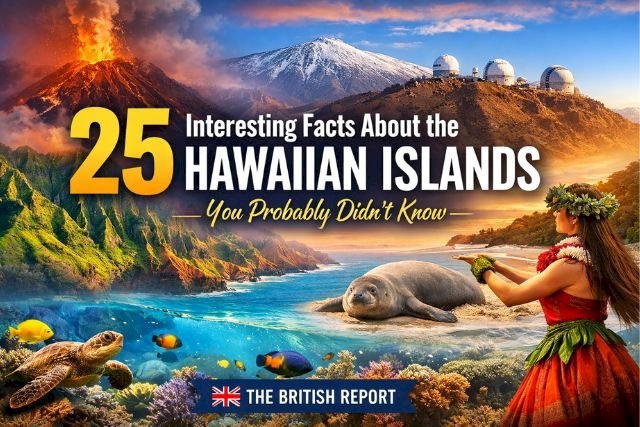
The Hawaiian Islands are often imagined as a postcard paradise—turquoise water, palm-lined beaches, and dramatic sunsets. But beyond the resorts and surf breaks lies one of the most fascinating island chains on Earth. Hawaii is a place where geology is still unfolding, ancient culture remains deeply alive, and nature operates by its own extraordinary rules.
From towering volcanoes that dwarf Mount Everest to a language once nearly erased and now proudly revived, Hawaii’s story is layered with surprises. Whether you’re planning a visit, studying geography, or simply curious about the world, these 25 interesting facts about the Hawaiian Islands reveal why this archipelago is unlike anywhere else on the planet.
Quick Overview: Hawaiian Islands at a Glance
-
Location: Central North Pacific Ocean
-
Total islands & islets: 130+
-
Main inhabited islands: 8
-
Climate zones: 10 of the world’s 14
-
Origin: Volcanic hotspot
-
Cultural roots: Polynesian
-
Political status: U.S. state (since 1959)
Geography & Natural Wonders
1. Hawaii Is the Most Isolated Island Chain on Earth
Hawaii sits farther from any major landmass than any other populated place on the planet. The nearest continent—North America—is roughly 3,200 kilometers away. This extreme isolation shaped everything from Hawaii’s unique wildlife to its distinct culture, allowing life to evolve independently for millions of years.
2. The Hawaiian Islands Are Still Growing
Unlike most islands, Hawaii isn’t static. Several volcanoes remain active, constantly reshaping the land. Lava flows add new ground to the coastline, meaning Hawaii is one of the few places on Earth where land is literally being created in real time.
3. The World’s Largest Volcano Is in Hawaii
Measured by volume and area, Hawaii hosts the largest volcano on Earth. It spans thousands of square kilometers and weighs so much that it actually depresses the Earth’s crust beneath it.
4. Some Hawaiian Mountains Are Taller Than Mount Everest
When measured from base to summit, certain Hawaiian mountains surpass Everest’s height. Their bases start deep on the ocean floor, making them true giants hidden beneath the waves.
5. Hawaii Has 10 of the World’s 14 Climate Zones
From tropical rainforests and arid deserts to alpine tundra, Hawaii packs astonishing climate diversity into a relatively small area. You can experience warm beaches, misty jungles, and snowy peaks within a single day.
History & Ancient Hawaiian Culture
6. Ancient Hawaiians Navigated the Pacific Without Modern Tools
Early Polynesian settlers reached Hawaii using only stars, ocean swells, wind patterns, and wildlife cues. Their navigational knowledge was so precise that it allowed them to cross thousands of kilometers of open ocean without compasses or maps.
7. Hawaii Was Once a Sovereign Kingdom
Before becoming part of the United States, Hawaii functioned as an independent monarchy with its own rulers, laws, and international treaties. This royal legacy still shapes Hawaiian identity today.
8. The Hawaiian Language Nearly Went Extinct
For decades, Hawaiian was banned in schools, pushing the language toward extinction. Thanks to cultural revival efforts, it’s now taught widely again, appearing on street signs, schools, and official documents.
9. Hula Is a Living Historical Record
Hula isn’t just dance—it’s storytelling. Every movement conveys history, genealogy, mythology, and spiritual beliefs, preserving knowledge long before written records existed.
10. Ancient Hawaiians Practiced Advanced Sustainability
Pre-contact Hawaiian society managed land and sea resources through a highly organized system that balanced farming, fishing, and conservation—principles modern sustainability movements still study today.
Wildlife & Biodiversity Facts
11. Most Native Hawaiian Species Exist Nowhere Else
Due to isolation, many plants and animals evolved uniquely in Hawaii. From birds to insects, a high percentage of native species are endemic—found nowhere else on Earth.
12. Hawaii Has No Native Land Snakes
Snakes never reached Hawaii naturally, leaving ecosystems free of these predators. This absence helped many bird species thrive—though introduced animals later disrupted that balance.
13. Coral Reefs Act as Natural Barriers
Hawaii’s coral reefs protect shorelines from erosion and storms while supporting marine life. These reefs are vital not just environmentally, but culturally and economically as well.
14. Hawaii Is Home to One of the Rarest Seals on Earth
The Hawaiian monk seal is among the world’s most endangered marine mammals. Conservation programs now play a crucial role in its survival.
15. Many Hawaiian Birds Are Critically Endangered
Habitat loss, invasive species, and disease have devastated native bird populations. Hawaii has lost more bird species than any other U.S. state.
Volcanic & Geological Surprises
16. The Islands Formed Over a Stationary Hotspot
Rather than shifting tectonic plates, Hawaii formed as the Pacific Plate moved over a stationary hotspot deep within the Earth’s mantle, creating a chain of islands over millions of years.
17. Each Island Has a Different Geological Age
The islands grow older as you move northwest. The youngest island is still forming, while the oldest islands have eroded into low-lying atolls.
18. Lava Creates Colorful Beaches
Hawaii boasts black, green, and red sand beaches—each colored by volcanic minerals, coral fragments, or iron-rich lava.
19. Earthquakes Are Common in Hawaii
Volcanic activity frequently triggers small earthquakes. While most go unnoticed, they’re a normal part of island life.
20. Lava Tubes Can Stretch for Miles
As lava cools on the surface while flowing beneath, it forms long underground tunnels. Some lava tubes were historically used as shelters and burial sites.
Modern Life & Fascinating Fun Facts
21. Hawaii Has Its Own Time Zone
Hawaii does not observe daylight saving time, keeping its clocks steady year-round—something locals appreciate and travelers often forget.
22. You Can Ski and Surf on the Same Day
High volcanic peaks can receive snow in winter, while beaches below remain warm. It’s one of the few places on Earth where skiing and surfing are possible in a single day.
23. Spam Is a Cultural Staple
Introduced during World War II, Spam became deeply embedded in Hawaiian cuisine. It now appears in countless local dishes and festivals.
24. Environmental Laws Are Strict
Hawaii enforces some of the strongest environmental protections in the U.S., banning harmful sunscreens and limiting development to preserve fragile ecosystems.
25. Every Island Has Its Own Personality
Each island offers a distinct vibe—from bustling urban centers to rural communities rooted in tradition. Locals often identify strongly with their home island, not just the state.
Frequently Asked Questions
How many Hawaiian Islands are there?
There are over 130 islands, reefs, and atolls, though only eight main islands are inhabited.
Why are the Hawaiian Islands so unique?
Their isolation, volcanic origin, and Polynesian heritage created ecosystems and cultures found nowhere else.
Are the Hawaiian Islands still forming?
Yes. Volcanic activity continues to create new land, especially on the southeastern end of the chain.
What is the oldest Hawaiian island?
The oldest islands lie far northwest and have eroded into low coral atolls.
Is Hawaii the most isolated place on Earth?
Yes—no other populated location is as far from a continental landmass.
Why These Facts Matter
Understanding Hawaii’s deeper story builds respect—for its people, culture, and environment. These facts highlight why conservation, cultural preservation, and responsible tourism are essential to protecting the islands’ future.
Conclusion
The Hawaiian Islands are far more than a tropical escape. They are a living classroom of geology, a stronghold of Polynesian culture, and one of the most biologically unique regions on Earth. From ancient navigation feats to modern environmental leadership, Hawaii continues to inspire awe far beyond its beaches. Knowing these 25 fascinating facts transforms how we see the islands—not just as a destination, but as one of the world’s greatest natural and cultural treasures.
Read More: Best Things to Do in San José, Costa Rica for First-Time Visitors