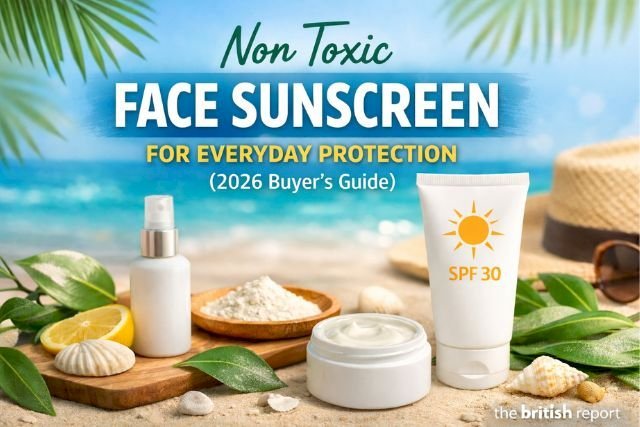
Most people now apply sunscreen to their face 365 days a year — under makeup, indoors, and during outdoor exposure. That makes ingredient safety critical.
1. Repeated Chemical Exposure
Chemical sunscreens are absorbed into the bloodstream after repeated use. Studies have shown detectable levels of certain filters after just a few days of application.
2. Hormone & Skin Barrier Health
Ingredients like oxybenzone and octinoxate have been associated with:
For acne-prone or reactive skin, this can worsen breakouts and redness.
3. Environmental Responsibility
Many chemical filters damage coral reefs and marine ecosystems. Non toxic mineral sunscreens are typically reef-safe and biodegradable, making them a better choice for both skin and planet.
Chemical vs Mineral Sunscreen: Which Is Truly Non Toxic?
Understanding this difference is essential when shopping for face sunscreen.
Chemical Sunscreens (What to Avoid)
Chemical sunscreens work by absorbing UV radiation and converting it into heat. While effective at blocking sunburn, they often irritate.
Common issues:
-
Increased risk of allergic reactions
-
Potential hormone disruption
-
Higher chance of eye stinging
Mineral Sunscreens (The Safer Choice)
Mineral sunscreens sit on the skin’s surface and physically block UV rays.
Key benefits:
Comparison Table
| Feature |
Chemical Sunscreen |
Mineral Sunscreen |
| UV Defense |
Absorbs UV rays |
Reflects UV rays |
| Skin Absorption |
High |
Minimal |
| Irritation Risk |
Moderate–High |
Very Low |
| Reef Safety |
Often harmful |
Reef-safe |
| Non Toxic Rating |
Low |
High |
Ingredients to Avoid in Face Sunscreens (2026 Update)
When choosing a non toxic face sunscreen, read the ingredient list carefully. Avoid products containing:
-
Oxybenzone – hormone disruptor
-
Octinoxate – linked to endocrine effects
-
Homosalate – potential toxicity concerns
-
Octocrylene – can degrade into harmful compounds
-
Avobenzone – unstable when exposed to sunlight
-
Parabens – hormone-mimicking preservatives
-
Phthalates – reproductive health concerns
-
Synthetic fragrance – common skin irritant
Safe Ingredients to Look For
High-quality non toxic face sunscreens rely on skin-friendly ingredients that protect and nourish at the same time.
Best ingredients include:
-
Non-nano zinc oxide (gold standard)
-
Titanium dioxide (non-nano)
-
Aloe vera (soothing)
-
Niacinamide (barrier repair)
-
Green tea extract (antioxidant)
-
Squalane (hydration)
-
Vitamin E (skin protection)
How to Choose a Non Toxic Face Sunscreen for Daily Use
Choose Based on Skin Type
Oily Skin
Dry Skin
Acne-Prone Skin
-
Zinc-based
-
Fragrance-free
-
Minimal ingredient list
Sensitive or Rosacea-Prone Skin
Understanding SPF for Everyday Face Protection
SPF doesn’t increase linearly:
-
SPF 30 blocks ~97% UVB
-
SPF 50 blocks ~98% UVB
For daily use:
Always choose broad-spectrum protection to guard against UVA aging rays.
Best Non Toxic Face Sunscreen Features to Look For
A high-quality daily sunscreen should include:
Best Non Toxic Face Sunscreens for Everyday Protection (2026 Picks)
1. Best Overall Non Toxic Face Sunscreen
-
Balanced zinc concentration
-
Lightweight, invisible finish
-
Suitable for all skin types
2. Best for Sensitive Skin
3. Best for Acne-Prone Skin
-
Oil-free mineral lotion
-
Won’t clog pores
-
Reduces inflammation
4. Best Tinted Mineral Sunscreen
5. Best Budget Non Toxic Face Sunscreen
Non Toxic Face Sunscreen for Men vs Women
Despite marketing claims, there is no real formulation difference between men’s and women’s sunscreens. Men’s products often:
-
Have heavier textures
-
Include fragrance
Unisex mineral sunscreens are usually the safest option for everyone.
Can You Use Non Toxic Face Sunscreen Under Makeup?
Yes — modern mineral sunscreens are designed for layering.
Correct order:
-
Cleanser
-
Moisturizer
-
Non toxic face sunscreen
-
Primer
-
Makeup
Allow sunscreen to absorb for 1–2 minutes to avoid pilling.
How to Apply Face Sunscreen Correctly (Most People Get This Wrong)
-
Use the two-finger method for face and neck
-
Apply 15 minutes before sun exposure
-
Reapply every 2 hours outdoors
-
Reapply after sweating or wiping face
Even indoors, sunscreen protects against blue light and UVA exposure from windows.
Common Myths About Non Toxic Sunscreen
“Mineral sunscreen doesn’t work.”
→ False. Zinc oxide provides broad-spectrum protection.
“White cast is unavoidable.”
→ Modern formulas are micronized and tinted.
“Higher SPF is always better.”
→ SPF 30 is enough for most daily use.
“Non toxic means weak protection.”
→ Zinc oxide is one of the most effective UV blockers.
Is Non Toxic Face Sunscreen Worth the Price?
While clean sunscreens may cost slightly more upfront, they:
-
Reduce long-term skin damage
-
Lower risk of irritation
-
Support skin barrier health
-
Minimize environmental harm
Over time, they often save money on dermatology treatments.
FAQs
What is the safest non toxic face sunscreen?
Mineral sunscreens with non-nano zinc oxide.
Is mineral sunscreen good for daily use?
Yes, especially for sensitive skin.
Can non toxic sunscreen prevent skin aging?
Yes — daily UVA protection slows wrinkles and pigmentation.
Is zinc oxide safe for long-term use?
Yes, it’s widely considered safe and stable.
Should I wear sunscreen indoors?
Yes, UVA rays penetrate windows.
Does non toxic sunscreen expire faster?
Check expiration dates — mineral sunscreens typically last 2–3 years.
Final Verdict: Best Non Toxic Face Sunscreen for Everyday Protection
In 2026, non toxic face sunscreen is no longer a niche choice — it’s the smart standard. With safer ingredients, reliable protection, and modern lightweight formulas, mineral sunscreens now outperform traditional chemical options in both safety and comfort.
If you want everyday sun protection without compromising your skin, hormones, or the environment, choosing a non toxic face sunscreen is one of the best skincare decisions you can make.
Read More: Regular vs. Organic Lip Balm: Which Is Truly Better for You?

 alissaperry