Understanding Cricket Pitch Length: From Stumps to Crease
Discover the official cricket pitch length, how it’s measured from stump to stump, crease markings explained, and why 22 yards defines fairness in cricket.
 alissaperry
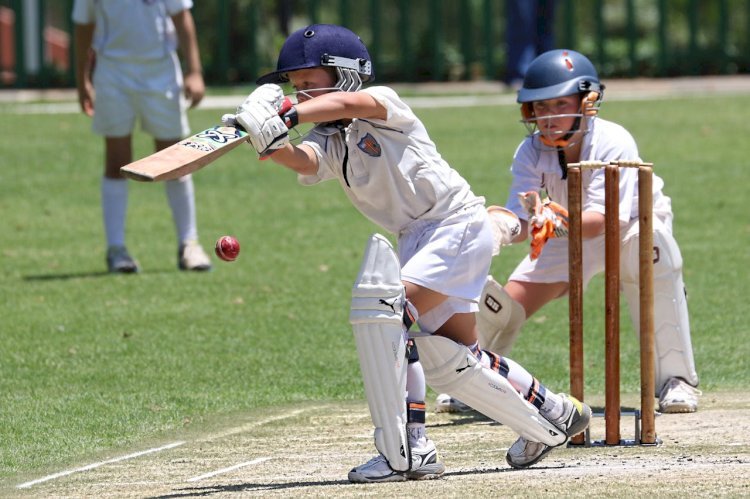
Every cricket match, from the backyard to the grandest stadiums, begins on one sacred strip — the cricket pitch. This narrow rectangle is more than just soil or turf; it’s where strategy, skill, and split-second decisions unfold.
Among all its details, Cricket Pitch Length plays a vital role in shaping the outcome of every delivery, influencing the pace, bounce, and fairness of play. For over two centuries, this measurement has remained a cornerstone of the sport’s identity — a consistent dimension that balances both bat and ball.
Let’s take a closer look at how the standard cricket pitch length is defined, how the creases are marked, and why every inch matters.
How Is Cricket Pitch Length Measured Exactly?
One of the most common misunderstandings about cricket pitch length is where the 22 yards are measured from.
The official measurement is taken from the center of one middle stump to the center of the opposite middle stump, not from crease to crease or popping line to popping line.
According to the Laws of Cricket maintained by Marylebone Cricket Club, this measurement ensures absolute consistency across all formats and venues worldwide.
This distinction matters because:
-
Creases are reference markings, not length markers
-
Bowling and popping creases may vary slightly in marking thickness
-
Stumps provide the only fixed, immovable reference point
This precision guarantees fairness — whether the match is played at village level or at Lord’s Cricket Ground.
What Is the Official Cricket Pitch Length?
The official cricket pitch length is 22 yards, or 20.12 meters, measured between the two sets of stumps. The width of the pitch is 10 feet (3.05 meters).
These measurements are standardized by the Marylebone Cricket Club (MCC), the historic guardian of cricket’s laws. Since the first codified rules of 1744, this distance has remained unchanged — symbolizing consistency and fairness across all formats.
-
Length between stumps: 22 yards (20.12 m)
-
Width: 10 feet (3.05 m)
-
Surface: Natural turf or synthetic mat, depending on format and conditions
For junior cricket, pitch lengths are shorter to suit players’ development levels — typically ranging from 16 to 19 yards, ensuring that young bowlers and batters can perform effectively.
Key Components of the Cricket Pitch
a. The Stumps and Creases
At each end of the pitch stands a set of three wooden stumps, topped with two bails. Between these ends lies the heart of the game — the area where bowlers deliver and batters defend.
There are several creases marked on the surface, each serving a unique purpose:
-
Bowling Crease: 8 feet 8 inches (2.64 m) long, aligned with the stumps.
-
Popping Crease: Drawn 4 feet (1.22 m) in front of the bowling crease — it marks the batter’s safe zone.
-
Return Crease: Drawn perpendicular to the bowling crease, 4 feet 4 inches (1.32 m) from each stump, defining where the bowler’s back foot must remain during delivery.
b. Pitch Surface & Material
Pitches are typically made from natural clay and grass, but synthetic or matting pitches are used in schools, amateur games, and indoor arenas.
-
Clay-based pitches provide bounce and spin.
-
Grass pitches affect pace and swing.
-
Artificial turf ensures durability and low maintenance.
c. Pitch Preparation
Ground staff meticulously prepare pitches using rollers, watering, and mowing to achieve the perfect balance between bounce and grip. A Test match pitch is usually firmer and drier, aiding spinners later, while T20 and ODI pitches are flatter for high-scoring games.
Cricket Pitch Dimensions Table (Quick Reference)
| Element | Measurement (in yards/meters) | Description |
|---|---|---|
| Pitch Length | 22 yards / 20.12 m | Distance between stumps |
| Pitch Width | 10 ft / 3.05 m | Width of playing area |
| Bowling Crease | 8 ft 8 in / 2.64 m | Line where bowler delivers |
| Popping Crease | 4 ft / 1.22 m in front | Batter’s safe zone |
| Return Crease | 4 ft 4 in / 1.32 m from stumps | Bowler’s foot limits |
Distance Between Stumps and Creases Explained
The 22-yard distance between the two sets of stumps is where cricket truly lives. It determines the speed at which a ball reaches the batter and the time they have to react — a mere 0.4 seconds for a 90-mph delivery.
Bowlers use the creases strategically:
-
By stepping close to the return crease, they can angle the ball differently.
-
By releasing just behind the popping crease, they maximize momentum.
This precision defines everything from pace bowling accuracy to spin flight control.
Example: A bowler delivering from behind the popping crease effectively reduces the ball’s travel distance slightly — changing how batters time their shots.
Variations in Pitch Length (Formats & Age Levels)
| Format | Pitch Length | Notes |
|---|---|---|
| International (Men & Women) | 22 yards (20.12 m) | ICC standard |
| Domestic Matches | 22 yards | Same as international |
| Under-13 | 19 yards | Shorter for young bowlers |
| Under-11 | 18 yards | Suited for skill development |
| Practice Nets | 18–22 yards | Adjustable distance |
The reasoning is simple — the shorter the pitch, the easier it is for young players to develop timing and accuracy.
How Pitch Length Influences the Game
a. For Bowlers
Pitch length defines the trajectory, bounce, and reaction time.
-
On a hard pitch, fast bowlers thrive as the ball skids and carries faster.
-
On a shorter or softer pitch, spinners dominate as the ball grips the surface longer.
The 22-yard rule ensures every bowler, from Brett Lee’s pace to Shane Warne’s spin, operates on a universally fair surface.
b. For Batters
For batters, that 22-yard stretch is all about timing.
-
A quicker pitch means less reaction time but more value for shots.
-
A slower pitch allows reading the ball’s turn or seam movement better.
c. For Umpires
Umpires rely on fixed pitch length and crease placement to judge LBW decisions, no-balls, and run-outs accurately. Any variation could lead to inconsistent rulings.
Comparing Pitch Length Across Different Levels
Even though the pitch length remains consistent at the top level, the surface quality and behavior vary dramatically across venues.
| Venue Type | Standard Length | Unique Traits |
|---|---|---|
| International Stadiums | 22 yards | Professionally curated pitches with balanced bounce |
| Domestic Grounds | 22 yards | Slight variation in soil and grass content |
| School / Junior Grounds | 16–19 yards | Easier batting and bowling conditions |
| Indoor Arenas | 18–20 yards | Synthetic matting used for even bounce |
This adaptability keeps cricket inclusive for all levels, while maintaining a universal law — 22 yards from stump to stump.
Common Myths About Cricket Pitch Length (Debunked)
Despite its simplicity, cricket pitch length is surrounded by persistent myths:
Myth 1: The pitch is measured from crease to crease
❌ False. The 22 yards are measured stump to stump.
Myth 2: Women’s cricket uses a shorter pitch
❌ False. Pitch length is identical across men’s and women’s cricket.
Myth 3: T20 cricket uses a shorter pitch
❌ False. Only the format, not the distance, changes.
Myth 4: Grounds can adjust pitch length slightly
❌ False. Any deviation from 22 yards violates the Laws of Cricket.
Addressing these misconceptions helps readers — and search engines — understand that pitch length is non-negotiable, regardless of format or venue.
Interesting Facts About Cricket Pitch Dimensions
-
The 22-yard length has been part of the Laws of Cricket since 1744.
-
“Pitch” originally meant to place or set up — hence “pitching the stumps.”
-
No matter the venue, pitch length never changes — only surface composition does.
-
Lord’s in London, the “Home of Cricket,” has a famous slope, yet the pitch remains precisely 22 yards long.
-
In day-night Tests, the grass moisture and lighting can make the pitch behave differently, though the dimensions remain constant.
Maintenance and Regulations
The MCC’s Law 7: The Pitch specifies that the surface must be:
-
Level and flat, with no more than 1.27 cm (½ inch) variation in height.
-
Properly rolled, mowed, and marked before play begins.
-
Inspected by umpires before and during matches to ensure fairness.
Groundsmen use laser tools and steel tapes to confirm exact measurements. Any tampering — such as digging or scuffing the pitch — can lead to match penalties or suspension.
Law 7 of Cricket: The Legal Foundation of Pitch Length
Cricket pitch dimensions are governed by Law 7: The Pitch, which legally defines not just the length, but the condition and inspection standards of the surface.
Under Law 7:
-
The pitch must measure exactly 22 yards
-
The surface must be level with no dangerous variation
-
Creases must be clearly marked and visible throughout play
-
Umpires have authority to suspend play if pitch integrity is compromised
By anchoring pitch length in law rather than tradition alone, cricket maintains global consistency — allowing performances to be compared fairly across eras and continents.
This is why records from the 1800s and modern-day cricket remain comparable: the distance never changed.
Why Accuracy in Pitch Length Defines the Spirit of Cricket
In cricket, precision equals fairness. Whether it’s a high-speed bouncer or a looping leg-break, every delivery must travel the same 22 yards. This constancy ensures that the contest remains one of skill, not chance.
Understanding Cricket Pitch Length gives fans and players deeper respect for the game’s geometry. It’s not just a distance — it’s the invisible thread that ties together centuries of cricketing tradition.
So, the next time you see a bowler charging in or a batter defending a tricky delivery, remember: every duel unfolds across the same 22 yards of history that define the beautiful game of cricket.
Cricket Pitch Length Explained (Quick Answer)
If you’re looking for a simple answer:
-
Cricket pitch length: 22 yards (20.12 meters)
-
Measured from: Center of middle stump to center of middle stump
-
Applies to: Test, ODI, T20, men’s & women’s cricket
-
Authority: Laws of Cricket (Law 7)
This distance has remained unchanged for over 275 years.
FAQs
Q1. What is the standard cricket pitch length?
A1. The standard cricket pitch length is 22 yards (20.12 meters) between the two sets of stumps.
Q2. Does pitch length vary for women’s cricket?
A2. No. Women’s cricket follows the same 22-yard pitch length as men’s professional matches.
Q3. How wide is a cricket pitch?
A3. The width of a standard cricket pitch is 10 feet (3.05 meters).
Q4. Why are creases important in cricket?
A4. Creases mark the bowler’s limits and define the batter’s safe zone — essential for judging run-outs and no-balls.
Q5. Who determines cricket pitch dimensions?
A5. The Marylebone Cricket Club (MCC), based in London, is the authority that maintains and updates the Laws of Cricket, including pitch dimensions.
Read More: Kids Baseball Bat Size Guide 2025: Find the Perfect Fit