25 Interesting Facts About Peru in 2026 (Shocking, Fun & Little-Known Secrets)
Discover 25 interesting facts about Peru that will surprise you—from ancient civilizations and natural wonders to food, culture, and hidden national secrets.
 alissaperry
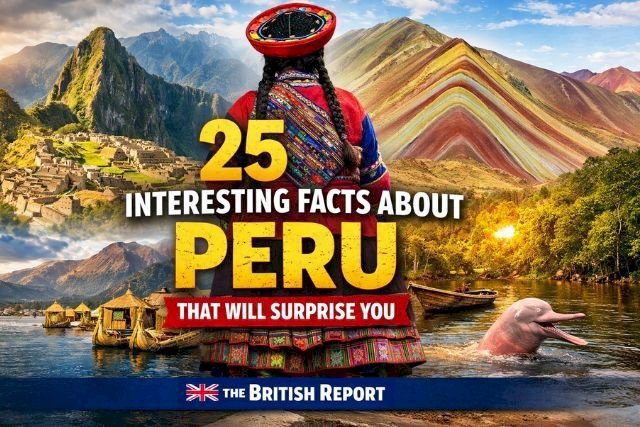
What if we told you that Peru is home to one of the oldest civilizations on Earth—older than Egypt—and thousands of potato varieties you’ve probably never seen?
From ancient Inca engineering to mysterious landscapes like Rainbow Mountain, Peru is full of surprising facts that most people don’t know.
In this guide, you’ll discover 25 interesting facts about Peru that reveal its history, culture, food, and natural wonders simply and engagingly.
Quick Facts About Peru (Featured Snippet Target)
- Capital: Lima
- Population: ~34 million
- Official Languages: Spanish, Quechua, Aymara
- Currency: Peruvian Sol
- Famous For: Machu Picchu, Amazon Rainforest, Inca Empire
Fast Facts About Peru (Quick Snapshot)
| Official Name | Republic of Peru |
| Capital City | Lima |
| Continent | South America |
| Population | ~34 million |
| Official Languages | Spanish, Quechua, Aymara |
| Currency | Peruvian Sol (PEN) |
| Geography | Coast, Andes Mountains, Amazon Rainforest |
| Famous For | Inca Empire, biodiversity, cuisine |
Ancient History & Civilization Facts
1. Peru Was the Heart of the Inca Empire
Peru was once the center of the mighty Inca Empire, the largest empire in pre-Columbian America. The Incas ruled much of western South America, building an advanced civilization known for engineering, agriculture, and astronomy. Their capital, Cusco, was considered the “navel of the world.”
2. Machu Picchu Remained Hidden From the World for Centuries
Although Machu Picchu is now one of the world’s most famous archaeological sites, it remained largely unknown to the outside world until 1911. Its remote location high in the Andes helped preserve the site from destruction and colonization.
3. Peru Is Home to One of the Oldest Civilizations on Earth
Long before the Incas, the Caral civilization thrived around 3000 BCE — making it one of the oldest known civilizations globally, older than ancient Egypt. Caral demonstrates that Peru’s history stretches back thousands of years.
4. The Incas Never Developed a Written Language
Instead of writing, the Incas used a complex system called quipu — knotted strings that recorded numbers, data, and possibly narratives. This unique method of communication remains one of history’s most intriguing mysteries.
5. Mountains Were Considered Sacred Beings
In Andean belief systems, mountains are known as Apus, spiritual guardians that protect communities. Even today, many Peruvians continue to honor these sacred peaks through rituals and offerings.
The cultural legacy of ancient Andean civilizations still influences modern Peru. Archaeological discoveries across the country continue to reveal complex societies that existed long before the Inca Empire. Civilizations such as the Nazca, Moche, and Chavín developed advanced irrigation systems, monumental architecture, and intricate artistic traditions that remain central to Peru’s historical identity today.
If you're planning a visit, check out the best things to do in Puerto Vallarta, from beautiful beaches and tours to hidden gems worth exploring
Geography & Natural Wonders
6. Peru Has Three Completely Different Geographic Regions
Peru is divided into the coastal desert (Costa), the Andean highlands (Sierra), and the Amazon rainforest (Selva). Few countries in the world offer such dramatic environmental diversity within one border.
7. A Large Part of the Amazon Rainforest Lies in Peru
Peru contains the second-largest portion of the Amazon Rainforest after Brazil. This vast ecosystem plays a crucial role in regulating the global climate and supporting extraordinary biodiversity.
8. Lake Titicaca Is the Highest Navigable Lake in the World
Sitting at over 3,800 meters above sea level, Lake Titicaca is the highest lake in the world that supports regular boat transportation. It also holds immense cultural significance for indigenous communities.
9. Peru Has Glaciers, Deserts, Rainforests, and Beaches
Despite being close to the equator, Peru has snow-covered mountains and glaciers alongside arid deserts and tropical rainforests. This makes it one of the most geographically diverse countries on the planet.
10. Rainbow Mountain Is a Natural Geological Wonder
Vinicunca, often called Rainbow Mountain, features vibrant layers of red, yellow, green, and blue caused by mineral deposits. Its popularity exploded only in recent years as melting snow revealed its colors.
Because of its extreme geographic diversity, Peru is often described as a “microcosm of South America.” The country’s landscape includes coastal deserts, snow-capped Andean peaks, and dense tropical rainforest within a relatively short distance. This unique geography creates dozens of microclimates that support extraordinary plant life, wildlife, and agricultural diversity.
Wildlife & Biodiversity Facts
11. Peru Is One of the World’s Most Biodiverse Countries
Peru consistently ranks among the top countries for biodiversity, with thousands of plant and animal species across its varied ecosystems.
12. Peru Is a Global Birdwatching Paradise
With over 1,800 bird species, Peru is one of the top birdwatching destinations worldwide. From hummingbirds to macaws, its avian diversity is unmatched.
13. The Andean Cock-of-the-Rock Is Peru’s National Bird
This bright red bird is known for its elaborate courtship displays and symbolizes Peru’s rich natural heritage.
14. Peru Is the Birthplace of the Potato
Peru is home to more than 4,000 varieties of potatoes. The crop was domesticated here thousands of years ago and later spread worldwide, becoming a staple food for millions.
15. The Amazon in Peru Hosts Rare Wildlife
Peru’s Amazon region is home to jaguars, pink river dolphins, giant otters, poison dart frogs, and countless other rare species found nowhere else on Earth.
What Makes Peru One of the Most Biodiverse Countries?
Peru’s unique geography creates multiple ecosystems—from deserts to rainforests—allowing thousands of species to thrive in one country.
Want cheaper flights every time? Explore 15 travel hacks to save money on flights in 2026 and start saving big on your trips
Food & Culinary Facts
16. Peruvian Cuisine Is Ranked Among the Best in the World
Peruvian food regularly earns international recognition for its fusion of indigenous ingredients, Spanish influences, African traditions, and Asian flavors.
17. Ceviche Is Peru’s National Dish
Made from fresh raw fish cured in citrus juice, ceviche is more than a meal — it’s a cultural symbol celebrated nationwide, even earning its own national holiday.
18. Peru Has Thousands of Corn Varieties
Corn in Peru comes in many colors, shapes, and sizes, including giant kernels used in traditional dishes like choclo con queso.
19. Guinea Pig (Cuy) Is a Traditional Delicacy
While unusual to outsiders, cuy has been consumed in Peru for centuries and remains an important ceremonial and festive dish in the Andes.
20. Pisco Is Peru’s National Spirit
Pisco, a grape brandy, is the base for the famous Pisco Sour cocktail. Peru takes great pride in its production and fiercely defends its cultural ownership.
Culture, People & Traditions
21. Indigenous Languages Are Still Widely Spoken
Quechua and Aymara remain widely spoken, especially in rural areas, preserving Peru’s linguistic heritage alongside Spanish.
22. Traditional Clothing Reflects Regional Identity
Handwoven textiles, colorful skirts, and distinctive hats are not just fashion — they indicate a person’s region, marital status, and cultural roots.
23. Peru Celebrates Hundreds of Festivals Each Year
From Inti Raymi to religious parades, Peru hosts countless festivals blending ancient traditions with Catholic influences.
24. Family and Community Are Central to Peruvian Life
Strong family bonds and community support systems are core values in Peruvian society, influencing daily life and social customs.
Modern Peru & Fun Facts
25. Lima Is South America’s Gastronomic Capital
Lima is home to world-class restaurants, renowned chefs, and a thriving food scene that attracts travelers from around the globe.
Why Peru Is One of the World’s Most Fascinating Countries
Peru’s uniqueness lies in its contrasts — ancient ruins beside modern cities, dense rainforest next to arid desert, and deeply rooted traditions thriving in a rapidly evolving society. Few countries offer such a rich blend of history, culture, biodiversity, and culinary excellence in one place.
Why Travelers Are Increasingly Visiting Peru
In recent years, Peru has become one of the most popular travel destinations in South America. Visitors are drawn not only by Machu Picchu but also by the country’s incredible natural diversity, culinary reputation, and living indigenous traditions. From trekking the Inca Trail to exploring the Amazon rainforest or discovering colonial cities like Cusco and Arequipa, Peru offers experiences that combine adventure, culture, and history in one place.
Tourism experts often highlight Peru as one of the few destinations where travelers can experience ancient ruins, vibrant festivals, world-class cuisine, and some of the planet’s richest biodiversity within a single journey. This blend of natural wonders and cultural heritage is one of the reasons Peru continues to captivate visitors from around the world.
Why Peru Is So Unique Compared to Other Countries
Peru is one of the few countries in the world where you can experience ancient civilizations, modern cities, dense rainforest, and high mountains all in one place.
Its mix of history, biodiversity, and culture makes it one of the most fascinating destinations globally.
Why Tourists Are Visiting Peru More in 2026
Travel to Peru is growing because of:
- Machu Picchu popularity
- Food tourism (Lima restaurants)
- Adventure travel (Inca Trail, Amazon)
FAQs
What is Peru most famous for?
Peru is best known for Machu Picchu, the Inca Empire, the Amazon Rainforest, and its world-class cuisine.
Is Peru safe for tourists?
Yes, Peru is generally safe for travelers, especially in major tourist areas, with standard precautions.
What languages are spoken in Peru?
Spanish is the main language, but Quechua and Aymara are also widely spoken.
When is the best time to visit Peru?
The dry season from May to September is ideal for most travel.
Why is Peru culturally important?
Peru preserves ancient civilizations, indigenous traditions, and biodiversity that have shaped global history.
Conclusion
Peru is a country where ancient civilizations, dramatic landscapes, and vibrant cultural traditions coexist in extraordinary ways. From the engineering genius of the Inca Empire to the unmatched biodiversity of the Amazon rainforest, Peru offers countless stories that continue to inspire historians, scientists, and travelers alike.
These interesting facts about Peru reveal just how unique the country truly is. Whether you’re exploring its history, tasting its world-renowned cuisine, or planning a future trip, Peru remains one of the most captivating destinations in the world.
If you’re interested in sacred sites, discover Bindhyabasini Temple’s history, significance, and its role in Hindu beliefs and traditions