Tower Fan vs Pedestal Fan: Which One Should You Buy in 2026?
Tower fan vs pedestal fan in 2026—compare airflow, noise levels, energy use, safety & price to choose the best fan for bedrooms, large rooms, and budgets.
 alissaperry
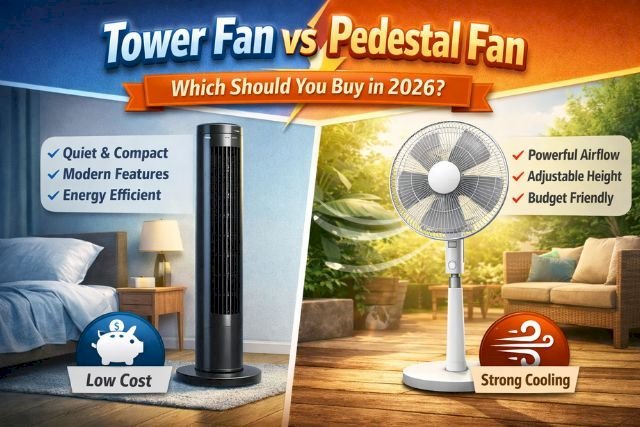
In 2026, energy-efficient and affordable cooling solutions remain a top priority for households worldwide. While air conditioners are essential in extreme climates, millions of homes still rely on fans for daily comfort due to their low cost, portability, and energy efficiency.
When choosing a fan, two options dominate the market: tower fans and pedestal fans. Both deliver effective cooling, but they differ significantly in design, airflow power, noise levels, safety, and price.
If you’re unsure which one suits your home, office, or apartment, this updated 2026 comparison guide breaks down tower fan vs pedestal fan across every important factor—so you can make a confident, future-proof decision.
Tower Fan vs Pedestal Fan (Quick Verdict – 2026)
If you want a quick answer, here it is:
-
Choose a tower fan if you value quiet operation, compact design, safety, and modern aesthetics—especially for bedrooms, offices, or small apartments.
-
Choose a pedestal fan if you need strong airflow for large rooms, shared spaces, or semi-outdoor areas, and want the most budget-friendly option.
Neither fan is universally better. The right choice depends on room size, noise sensitivity, safety needs, and budget.
What Is a Tower Fan?
A tower fan is a tall, slim fan that stands vertically and distributes air using internal blades and oscillation technology. Instead of large exposed blades, it pushes air through a narrow column for smooth, even airflow.
Key Features
-
Slim, space-saving vertical design
-
Wide oscillation for even air distribution
-
Quieter operation than traditional fans
-
Advanced features in 2026 models: timers, remote control, sleep modes, air purification
-
Enclosed blades for added safety
Best for: Bedrooms, home offices, apartments, and modern interiors where quiet comfort matters.
What Is a Pedestal Fan?
A pedestal fan (also called a stand fan) features a large circular blade head mounted on an adjustable stand. It delivers direct, powerful airflow and can be angled and raised to suit different cooling needs.
Key Features
-
Height and tilt adjustable
-
Larger blades for stronger air movement
-
Wide oscillation coverage
-
Simple mechanical design
-
Lower upfront cost
Best for: Living rooms, large halls, family spaces, workshops, balconies, and patios.
Key Differences at a Glance (2026)
| Feature | Tower Fan | Pedestal Fan |
|---|---|---|
| Design & Size | Slim, modern, compact | Bulky, requires more floor space |
| Airflow Strength | Moderate, consistent | Strong, high-volume airflow |
| Noise Level | Quieter | Louder at high speeds |
| Portability | Lightweight, easy to move | Heavier but height adjustable |
| Average Price (2026) | $70–$170 | $35–$110 |
| Safety | Very high (enclosed blades) | Moderate (exposed blades) |
| Best For | Bedrooms, offices | Large rooms, open spaces |
Advantages of Tower Fans (2026)
-
Space-Saving Design – Ideal for tight corners and small rooms
-
Quiet Operation – Perfect for sleeping, studying, or remote work
-
Modern Features – Timers, remotes, sleep modes, air purification
-
Child & Pet Friendly – Enclosed design reduces injury risk
-
Stylish Appearance – Blends seamlessly into contemporary interiors
Advantages of Pedestal Fans
-
Powerful Cooling – Moves more air across larger spaces
-
Adjustable Height & Angle – Direct airflow exactly where needed
-
Budget-Friendly – Lower cost than most tower fans
-
Durable & Easy to Repair – Simple mechanical construction
-
Versatile Use – Suitable for indoor and semi-outdoor environments
Energy Efficiency & Power Consumption (2026 Update)
Energy efficiency continues to improve in 2026, especially with better motors and optimized airflow design.
-
Tower Fans: Typically consume 40–70 watts
-
Pedestal Fans: Usually consume 50–80 watts
While pedestal fans may use slightly more power, both remain far more economical than air conditioners. Over long-term daily use, tower fans can offer slightly lower electricity bills.
Real-World Electricity Cost Comparison (2026)
Using a fan 8 hours per day for one month:
-
Tower fan: Approx. $2–$4 per month
-
Pedestal fan: Approx. $3–$5 per month
The difference is small, and both options remain excellent low-cost cooling solutions in 2026.
Noise Levels & Comfort
-
Tower Fans: Designed for quiet performance, with premium models operating below 50 dB, ideal for light sleepers.
-
Pedestal Fans: Can reach 60–70 dB at higher speeds—noticeably louder but effective for daytime cooling.
If silence matters, tower fans clearly win.
Design, Portability & Space Efficiency
-
Tower Fan: Minimal footprint, sleek appearance, easy to relocate
-
Pedestal Fan: Requires more space but offers superior height and angle flexibility
For small apartments, tower fans are far more practical.
Price Comparison in 2026
-
Tower Fans: $70–$170 (premium air-purifying models may exceed $200)
-
Pedestal Fans: $35–$110
Budget tip:
-
Lowest cost → Pedestal fan
-
Best features & aesthetics → Tower fan
Best Use Cases
Tower Fan
-
Bedrooms
-
Home offices
-
Small apartments
-
Homes with children or pets
-
Style-focused interiors
Pedestal Fan
-
Large living rooms
-
Open floor plans
-
Balconies and patios
-
Budget-conscious households
-
Shared family spaces
How to Choose Between a Tower Fan and a Pedestal Fan in 2026
Start by assessing room size. Rooms under 150 sq ft benefit from tower fans, while larger spaces need pedestal fans’ airflow strength.
Next, consider noise tolerance—tower fans suit sleepers and workers, pedestal fans suit daytime use. Finally, factor in budget, safety, and design preference.
Tower Fan vs Pedestal Fan: Which Is Right for You?
-
Choose a tower fan if you prioritize quietness, safety, modern design, and compact size.
-
Choose a pedestal fan if you want strong cooling power at the lowest price.
Both fans solve different problems—choosing wisely ensures better comfort and value.
Pros & Cons Summary
Tower fans excel in silence, safety, and aesthetics, but struggle in very large rooms. Pedestal fans deliver raw airflow power and affordability, though they are noisier and bulkier. Understanding these trade-offs helps buyers make smarter, need-based decisions in 2026.
Conclusion
In 2026, the tower fan vs pedestal fan debate comes down to lifestyle and space. Tower fans are ideal for modern homes, quiet environments, and compact rooms. Pedestal fans remain unbeatable for powerful, low-cost cooling in large areas.
Both are far cheaper to run than air conditioners—and when chosen correctly, either can keep you comfortable all summer without breaking your budget.
FAQs
1. Which lasts longer: tower fan or pedestal fan?
Both typically last 5–10 years. Pedestal fans may last slightly longer due to simpler mechanics.
2. Are tower fans worth the higher price in 2026?
Yes—if you want quiet operation, advanced features, and modern design.
3. Do pedestal fans consume more electricity?
Slightly, but the difference is minimal and negligible in real-world use.
4. Which is better for small apartments?
Tower fans—compact, quiet, and space-saving.
5. Can tower fans replace air conditioners?
No, but they’re excellent supplements or standalone solutions where AC isn’t practical.
Read More: Revel F226Be vs Magico S1 – In-Depth Review & Buying Guide