Top 20 Most Famous Statues Around the Globe
Explore the world’s most famous statues, from ancient wonders to modern icons. Learn their stories, symbolism, and best travel tips in this detailed global guide.
 alissaperry
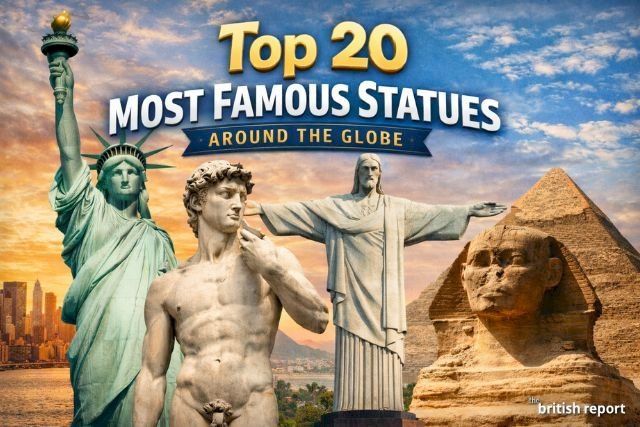
Statues are more than just carved stone or cast bronze — they are powerful storytellers. Across civilizations, statues have commemorated leaders, honored deities, symbolized freedom, marked revolutions, and embodied artistic mastery. Today, many of the world’s most famous statues attract millions of tourists annually, inspiring curiosity, cultural appreciation, and global recognition.
In this comprehensive guide, we explore the top 20 most famous statues around the globe, covering their history, location, symbolism, cultural impact, and travel value. From ancient wonders to modern marvels, these statues reveal humanity’s creativity across centuries.
1. Statue of Liberty (USA)
-
Location: New York City, USA
-
Year Completed: 1886
-
Height: 93 meters (305 ft) including pedestal
-
Designer: Frédéric Auguste Bartholdi, with Gustave Eiffel (engineer)
Gifted by France to the United States, the Statue of Liberty stands as an enduring symbol of freedom, democracy, and hope for immigrants arriving through Ellis Island. The statue depicts the Roman goddess Libertas holding a torch of enlightenment and a tablet inscribed with July 4, 1776.
Today, more than 4 million visitors come annually, making it one of the most iconic monuments in the world. Ferries from Battery Park offer access to Liberty Island, and crown reservations provide panoramic skyline views.
Interesting Fact: The statue’s original torch is now displayed in the Statue of Liberty Museum after being replaced in 1986.
2. Christ the Redeemer (Brazil)
-
Location: Rio de Janeiro, Brazil
-
Year Completed: 1931
-
Height: 38 meters (125 ft)
-
Material: Reinforced concrete & soapstone
Standing atop Corcovado Mountain, Christ the Redeemer is one of the most recognizable religious monuments on earth. With outstretched arms spanning 28 meters, it symbolizes peace and welcomes millions of tourists every year.
In 2007, it was voted one of the New Seven Wonders of the World. The site is accessible via scenic tram or cable car, offering stunning views of Rio’s beaches and mountains.
Interesting Fact: Lightning often strikes the statue; small repairs are regularly made to maintain its structure.
3. The Great Sphinx of Giza (Egypt)
-
Location: Giza Plateau, Egypt
-
Construction: Estimated around 2500 BCE
-
Length: 73 meters (240 ft)
Carved from a single limestone ridge, the Great Sphinx remains one of the most mysterious statues ever created. With the body of a lion and the head of a pharaoh — likely Khafre — it symbolizes strength, guardianship, and divine power.
Its exact purpose and missing nose remain subjects of historical debate. As part of the Giza complex, it receives countless tourists who visit to explore ancient Egypt’s architectural brilliance.
Interesting Fact: For centuries, the Sphinx was buried in sand up to its shoulders until modern excavations revealed its full form.
4. David by Michelangelo (Italy)
-
Location: Florence, Italy (Galleria dell’Accademia)
-
Year Completed: 1504
-
Height: 5.17 meters (17 ft)
Michelangelo’s David represents biblical hero David before his battle with Goliath, capturing Renaissance ideals of human beauty, proportion, and strength. Sculpted from a single block of marble, it remains an artistic masterpiece studied by historians worldwide.
The original statue resides in the Accademia Gallery, while replicas in Piazza della Signoria and Piazzale Michelangelo draw tourists for photography and viewing.
Interesting Fact: The marble used for David was considered flawed; Michelangelo’s genius transformed it into perfection.
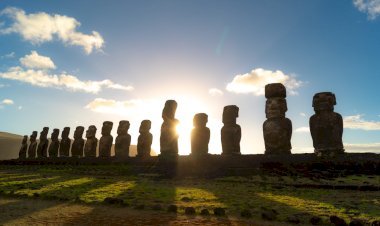
5. Moai Statues (Easter Island, Chile)
-
Location: Easter Island (Rapa Nui), Chile
-
Creators: Rapa Nui civilization
-
Time Period: 13th–16th centuries
The Moai, nearly 900 monumental stone heads with torsos, stand as silent guardians across Easter Island. Believed to represent ancestral chiefs, they reflect the complex spiritual and political culture of the Rapa Nui people.
Many Moai weigh over 80 tons, showcasing advanced ancient engineering. Today it’s a UNESCO World Heritage site attracting archaeologists and tourists alike.
Interesting Fact: Most Moai faced inland to watch over villages, not out to sea as commonly believed.
6. The Thinker (France)
-
Location: Paris, France (Musée Rodin)
-
Artist: Auguste Rodin
-
Year Created: 1904
The Thinker is a philosophical representation of contemplation and human intellect. Initially part of a larger work, The Gates of Hell, it later became an independent symbol of deep thought and creativity.
Replicas exist in museums worldwide, making it one of the most widely recognized sculptures in modern art history.
Interesting Fact: The statue was originally named The Poet.
7. The Motherland Calls (Russia)
-
Location: Volgograd, Russia
-
Year Completed: 1967
-
Height: 85 meters (279 ft)
Commemorating the Soviet victory in the Battle of Stalingrad, this dramatic statue depicts a woman urging her people forward. When unveiled, it was the tallest statue in the world and remains the tallest female statue globally without a pedestal.
Visitors can explore the Mamayev Kurgan complex and learn about WWII’s Eastern Front significance.
Interesting Fact: It weighs over 8,000 tons and required pioneering engineering to balance its outstretched sword.
8. The Little Mermaid (Denmark)
-
Location: Copenhagen, Denmark
-
Year Installed: 1913
-
Inspired By: Hans Christian Andersen’s fairy tale
Small but iconic, The Little Mermaid sits on a harbor rock, representing the tragic heroine of Andersen’s story. Commissioned by brewer Carl Jacobsen and sculpted by Edvard Eriksen, it remains a top symbol of Copenhagen.
Thousands visit daily, making it one of Europe’s most photographed statues.
Interesting Fact: The statue has been vandalized several times, reflecting its cultural visibility.
9. Tian Tan Buddha (Hong Kong)
-
Location: Lantau Island, Hong Kong
-
Year Completed: 1993
-
Height: 34 meters (112 ft)
Also called the Big Buddha, this bronze statue symbolizes harmony between humanity, nature, and religion. It sits near Po Lin Monastery, accessible via cable car and a 268-step staircase.
Its serene setting attracts pilgrims and tourists alike.
Interesting Fact: The statue faces north, unusual for Buddhist statues, to overlook the Chinese mainland.
10. Leshan Giant Buddha (China)
-
Location: Sichuan, China
-
Era Built: 713–803 CE
-
Height: 71 meters (233 ft)
Carved directly into a cliff overlooking three converging rivers, the Leshan Giant Buddha was intended to calm dangerous waters for passing ships. Today, it is a UNESCO World Heritage Site, attracting millions yearly.
Interesting Fact: Ingenious internal drainage channels protect the statue from erosion.
11. The Terracotta Army (China)
-
Location: Xi’an, China
-
Discovery: 1974
-
Built For: Emperor Qin Shi Huang
Though not a single statue, the Terracotta Army includes more than 8,000 life-sized soldiers, horses, and weapons buried to guard China’s first emperor in the afterlife.
Each soldier has unique facial features, reflecting high craftsmanship.
Interesting Fact: Only a small portion has been fully excavated due to preservation challenges.
12. Mount Rushmore (USA)
-
Location: South Dakota, USA
-
Year Completed: 1941
-
Figures Depicted: Washington, Jefferson, Roosevelt, Lincoln
Carved into the Black Hills, Mount Rushmore honors four U.S. presidents who represent national founding, growth, development, and preservation. Nearly 3 million visit annually.
It remains iconic yet controversial due to the history of the land it occupies, which is sacred to the Lakota Sioux.
Interesting Fact: The original plan included carvings down to each figure’s waist, but funding shortages halted expansion.
13. Cristo Rey (Colombia)
-
Location: Cali, Colombia
-
Year Completed: 1953
-
Height: 26 meters (85 ft)
Cristo Rey stands on Cerro de los Cristales, overlooking Cali. Though smaller than Christ the Redeemer, it remains a major pilgrimage site, especially during Holy Week.
Tourists enjoy panoramic city views and cultural markets nearby.
Interesting Fact: Its name references the hill’s quartz crystals discovered centuries ago.
14. Spring Temple Buddha (China)
-
Location: Henan Province, China
-
Year Completed: 2008
-
Total Height: 153 meters (including pedestal)
Once the tallest statue in the world, the Spring Temple Buddha represents Vairocana Buddha and symbolizes spiritual radiance. Surrounded by landscaped complexes, it draws both tourists and Buddhist devotees.
Interesting Fact: Construction required more than 1,100 copper pieces weighing nearly 1,000 tons.
15. Ushiku Daibutsu (Japan)
-
Location: Ushiku, Japan
-
Year Completed: 1993
-
Height: 120 meters (394 ft)
Towering over the Japanese countryside, Ushiku Daibutsu features an internal elevator leading to an observation deck. It represents Amitabha Buddha and remains among the tallest statues globally.
Interesting Fact: Surrounding gardens feature koi ponds and seasonal flowers.
16. Merlion Statue (Singapore)
-
Location: Marina Bay, Singapore
-
Year Installed: 1972
-
Symbolism: Lion head (Singapore) + Fish body (fishing village origin)
The Merlion has become Singapore’s national mascot and most iconic photo spot. Overlooking Marina Bay Sands, it draws millions yearly.
Interesting Fact: The original statue once stood at the Singapore River mouth before being relocated in 2002.
17. The Angel of the North (UK)
-
Location: Gateshead, England
-
Artist: Antony Gormley
-
Year Erected: 1998
-
Wingspan: 54 meters (177 ft)
This modern steel sculpture symbolizes post-industrial transformation and resilience in Northern England. Though modern and minimalistic, it has become a beloved British cultural landmark.
Interesting Fact: Nearly 90,000 motorists see it daily from the A1 road.
18. Manneken Pis (Belgium)
-
Location: Brussels, Belgium
-
Year Created: 1619
-
Artist: Jerome Duquesnoy
This small bronze statue of a urinating boy has become one of Brussels' most unusual and humorous icons. He has hundreds of costumes gifted by nations and organizations.
Interesting Fact: The statue has been stolen multiple times and replaced.
19. Nelson Mandela Statue (South Africa)
-
Location: Pretoria, South Africa (Union Buildings)
-
Year Unveiled: 2013
With arms outstretched, Mandela’s statue symbolizes reconciliation, unity, and the end of apartheid. Local and international tourists visit to pay tribute to South Africa’s most revered leader.
Interesting Fact: The statue contains a tiny bronze rabbit hidden in Mandela’s ear by the sculptors — later removed after controversy.
20. African Renaissance Monument (Senegal)
-
Location: Dakar, Senegal
-
Year Completed: 2010
-
Height: 49 meters (160 ft)
This towering bronze statue depicts a family pointing toward the horizon, symbolizing renaissance, liberation, and African progress. Built on a hill, it offers sweeping views of the Atlantic coast.
Interesting Fact: It is the tallest statue in Africa.
Bonus: Famous Ancient Statues
Some ancient statues no longer exist but deserve mention for historical significance:
-
Colossus of Rhodes (Greece) — One of the Seven Wonders
-
Statue of Zeus at Olympia (Greece) — Wonder of the ancient world
-
Venus de Milo (France) — Masterpiece at the Louvre
-
Discobolus (Greece) — Celebrated Greek athletic sculpture
These works shape modern understanding of ancient art and engineering.
Travel Tips for Visiting Famous Statues
Before planning statue-focused travel, consider:
Best Travel Seasons
-
Spring and autumn offer ideal temperatures in most regions.
-
Avoid monsoons in Asia and extreme summers in desert climates.
Photography & Restrictions
-
Some indoor museums prohibit flash photography.
-
Drones may be restricted around major monuments.
Ticketing & Reservations
-
Book ahead for sites like the Statue of Liberty crown access.
-
UNESCO sites often have regulated entry periods.
Cultural Etiquette
-
Respect religious customs at Buddhist and Catholic sites.
-
Avoid climbing statues or touching preserved artifacts.
Conclusion
The world’s most famous statues are more than stunning landmarks — they are cultural mirrors reflecting human beliefs, struggles, artistic expression, and historical transformation. From the ancient Great Sphinx to modern icons like the Angel of the North, these statues connect us to civilizations across time.
Whether you’re an art lover, historian, traveler, or cultural explorer, visiting these monuments offers unforgettable insight into humanity’s shared heritage.
FAQs
1. Which is the most famous statue in the world?
The Statue of Liberty and Christ the Redeemer are often regarded as the most recognizable globally.
2. What is the tallest statue in the world?
The current tallest is the Statue of Unity (India) at 182 meters (597 ft), not included above.
3. What is the oldest famous statue?
The Great Sphinx of Giza is among the oldest known monumental statues.
4. Which statue attracts the most tourists?
Christ the Redeemer, Statue of Liberty, and Leshan Giant Buddha receive millions annually.
5. Are ancient statues still being discovered?
Yes — archaeological discoveries frequently reveal new artifacts, especially in Egypt, Greece, China, and Mesopotamia.
Read More: Top Things to Do on Easter Island: Must-See Moai Statues, Tours & Hidden Gems