Soccer Goal Size by Age (2026): Full Chart for Youth, 7v7, 9v9 & FIFA Goals
Soccer goal size by age explained with a simple chart. Learn FIFA goal dimensions, youth sizes (U6–U12), 7v7, 9v9 & indoor goal sizes in 2026.
 alissaperry
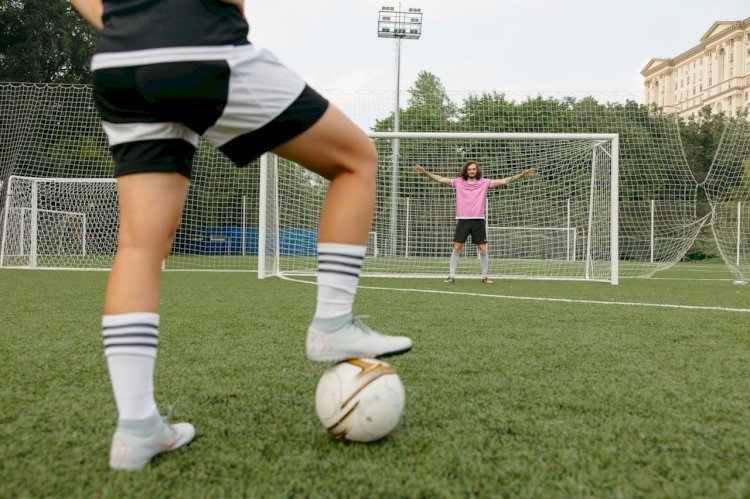
Choosing the right soccer goal size is essential for fair play, proper skill development, and player safety. Whether you're a coach, parent, player, or field manager, understanding official goal dimensions helps ensure you’re following league rules and using the correct equipment for each age group.
Soccer goal sizes vary depending on the match format (e.g., 11v11, 9v9, 7v7, 5v5) and the age of the players. This guide breaks down all official measurements used by FIFA, US Youth Soccer, The FA, NFHS, and other major organizations.
Soccer goal size depends on the player’s age and match format. For adult and professional matches, the official FIFA goal size is 24 feet wide and 8 feet high. However, youth soccer uses smaller goals—for example, U10 and U12 typically use 18.5 × 6.5 feet goals, while younger age groups like U6 and U8 use much smaller mini goals. Using the correct goal size ensures fair play, better skill development, and safer gameplay.
Why Soccer Goal Size Matters More Than Ever (2026 Update)
In 2026, choosing the correct soccer goal size is more important than ever, given the increased focus on player safety, age-appropriate development, and standardized coaching methods. Using oversized goals for young players can lead to poor shooting habits, frustration, and injury risk, while undersized goals for older players limit tactical growth and finishing accuracy. Governing bodies like FIFA, US Youth Soccer, and The FA now strongly emphasize scaled equipment to match physical growth, reaction speed, and skill progression—making goal size a foundational element of modern soccer training.
How Soccer Goal Size Affects Scoring, Tactics, and Player Confidence
Soccer goal size directly influences how the game is played, especially at youth and amateur levels. Larger goals naturally increase scoring frequency, which can boost confidence for beginners but may also discourage goalkeepers if introduced too early. Smaller goals reduce random scoring and reward technical accuracy, decision-making, and shot placement.
In modern coaching environments, goal size is considered a tactical variable—not just equipment. Coaches intentionally adjust goal dimensions to control game tempo, encourage passing over shooting, and improve finishing efficiency. This growing emphasis on equipment-based development is why governing bodies like FIFA and US Youth Soccer continue to reinforce strict size guidelines in 2026.
Official Soccer Goal Size Standards
Below is a simple table summarizing the most commonly used soccer goal sizes at every age level:
| Age Group | Match Format | Width | Height | Typical Depth | Standards |
|---|---|---|---|---|---|
| U6 | 3v3 / 4v4 | 4 ft – 6 ft | 3 ft – 4 ft | 2 ft – 3 ft | US Youth Soccer, The FA |
| U8 | 5v5 | 4 ft x 6 ft OR 6 ft x 12 ft | 4 ft – 6 ft | 2 ft – 4 ft | USYS, AYSO |
| U10 | 7v7 | 18.5 ft x 6.5 ft | 6.5 ft | 4–6 ft | USYS |
| U12 | 9v9 | 18.5 ft x 6.5 ft | 6.5 ft | 4–6 ft | USYS, FA |
| U13–Adult | 11v11 | 24 ft x 8 ft | 8 ft | 6–8 ft | FIFA Standard |
| Indoor | Indoor / Arena | 12 ft x 6 ft | 6 ft | Varies | Local |
| Futsal | Futsal | 9.8 ft x 6.6 ft | 6.6 ft | 3–4 ft | FIFA Futsal |
What Size Is a Soccer Goal? (Quick Answer)
- FIFA / Adult: 24 ft × 8 ft
- U12 (9v9): 18.5 ft × 6.5 ft
- U10 (7v7): 18.5 ft × 6.5 ft
- U8: 6 ft × 12 ft or 4 ft × 6 ft
- U6: 4 ft × 6 ft
- Futsal: 9.8 ft × 6.6 ft
- Indoor: 12 ft × 6 ft
Soccer Goal Sizes Change by Country or League?
While soccer goal sizes are largely standardized worldwide, slight variations can occur depending on the governing body and competition level. FIFA-approved dimensions are followed in international and professional play, while youth leagues such as US Youth Soccer, AYSO, and The FA may allow flexibility for grassroots programs.
Local recreational leagues sometimes adjust goal sizes based on field availability or player development goals, but competitive leagues almost always follow official standards to maintain fairness and consistency.
Soccer Goal Size Compliance, Insurance & Liability
One frequently overlooked factor in soccer goal sizing is insurance and legal compliance. Many schools, clubs, and municipalities require that goals meet official standards set by governing bodies such as The Football Association, NFHS, or local football federations.
Using non-compliant or improperly anchored goals can invalidate insurance coverage in the event of injury or property damage. In 2026, equipment compliance checks are increasingly common, especially in school sports and sanctioned youth leagues. Ensuring the correct goal size, anchoring system, and safety certification protects not only players—but also coaches, organizers, and facility owners.
Soccer Goal Size Rules by Governing Body (FIFA, FA, US Youth Soccer, NFHS)
Soccer goal size regulations are defined and enforced by official governing bodies to ensure fairness, safety, and consistency across all levels of play. Organizations such as FIFA, US Youth Soccer, The FA, and NFHS publish detailed equipment standards that leagues must follow.
FIFA mandates a 24 ft × 8 ft goal for all professional and international matches, while youth organizations require scaled-down goals based on age, match format, and player development. High school and college competitions in the United States follow NFHS and NCAA regulations, which align closely with FIFA standards at the senior level. Following the correct governing-body guidelines is essential not only for compliance but also for insurance coverage, competitive eligibility, and player safety audits.
FIFA Regulation Soccer Goal Size (Adult Level)
For all professional, college, senior, and international matches, the official soccer goal size approved by FIFA is:
-
Width: 24 ft (7.32 m)
-
Height: 8 ft (2.44 m)
-
Depth: 6–8 ft (varies by model)
These goals are used in:
-
FIFA World Cup
-
English Premier League
-
La Liga
-
MLS
-
College matches (NCAA)
-
High school matches (NFHS)
Why This Size?
The 24x8 ft dimensions create the ideal challenge for elite athletes, balancing scoring difficulty with goalkeeping ability. The width allows for a wide range of shooting angles, while the height offers a balanced scoring window for headers and long-range shots.
Materials Used
Regulation goals are commonly made from:
-
Powder-coated steel
-
Aluminum (lightweight for portability)
-
Square or round posts
-
Depth ranging from box-style (deep) to European-style (rounded)
Youth Soccer Goal Sizes by Age Group
Youth soccer does NOT use full-sized goals until around age 13. This ensures kids play with equipment scaled to their height, strength, and developmental stage.
U6 Soccer Goal Size (Under-6)
-
Typical Size: 4 ft x 6 ft (1.2 m x 1.8 m)
-
Formats: 3v3 or 4v4
-
Purpose: Fun, coordination, basic shooting accuracy
These tiny goals are perfect for toddlers and beginners exploring the sport safely.
U8 Soccer Goal Size (Under-8)
-
Typical Size: 4 ft x 6 ft OR 6 ft x 12 ft
-
Formats: 4v4 or 5v5
Depending on the league, U8 teams may still use mini-goals or transition to wider ones to prepare for real match play.
Why This Size?
-
Supports developing foot strength
-
Gives kids better scoring chances
-
Encourages teamwork and passing
U10 Soccer Goal Size (Under-10)
-
Official Size: 6.5 ft x 18.5 ft (2 m x 5.6 m)
-
Format: 7v7
This is the first “big” goal kids use, helping with:
-
Longer shots
-
Expanded field awareness
-
Early goalkeeper development
Most US Youth Soccer and FA leagues follow this standard.
U12 Soccer Goal Size (Under-12)
-
Official Size: 6.5 ft x 18.5 ft
-
Format: 9v9
This transitional stage prepares young players for full-size 11v11 fields.
Benefits:
-
Introduces more structured team formations
-
Improves shooting skills with more realistic spacing
-
Still manageable for young goalkeepers
Soccer Goal Size and Goalkeeper Development
Goal size plays a critical role in goalkeeper development, particularly during the formative ages of 7 to 12. Oversized goals can overwhelm young goalkeepers, leading to poor positioning habits and reduced confidence, while undersized goals limit reaction training and aerial development.
Age-appropriate goals help goalkeepers develop proper footwork, diving technique, and spatial awareness without unrealistic physical demands. Proper scaling also reduces injury risk caused by overstretching or repeated impact. This is why professional academies and national youth programs strictly enforce goal-size guidelines for goalkeeper development alongside outfield player progression.
High School & College Soccer Goal Size
At the high school and college levels, the soccer goal size is the exact same as FIFA:
-
24 ft x 8 ft
Organizations using this size:
-
NFHS (National Federation of State High School Associations)
-
NCAA (National Collegiate Athletic Association)
Why It Matters
Uniformity ensures players can transition smoothly between local, national, and international competitions.
Indoor Soccer Goal Sizes
Indoor soccer requires smaller goals because the field is smaller and the pace is faster.
Standard Indoor Goal Size
-
12 ft x 6 ft (3.6 m x 1.8 m)
Indoor soccer tends to feature:
-
Higher-scoring matches
-
Continuous play off the walls
-
Smaller goalkeepers’ boxes
Differences from Outdoor Soccer
-
Fast-paced shooting
-
Lower crossbars
-
Thicker padding for safety
Futsal Goal Size
Futsal (FIFA’s official indoor variant) uses a unique goal size:
-
Width: 9.8 ft (3 m)
-
Height: 6.6 ft (2 m)
-
Depth: 3–4 ft
Why the Smaller Goal?
Futsal focuses on:
-
Ball control
-
Quick passes
-
Close-range finishing
Smaller goals reward accuracy over power.
Different Soccer Goal Types Explained
Different settings require different goal types. Below are the most common options.
Portable Soccer Goals
-
Made from PVC or aluminum
-
Easy to collapse and transport
-
Great for:
-
Training
-
Parks
-
Weekend games
-
Pros: Affordable, lightweight
Cons: Less durable for heavy use
Permanent / Fixed Goals
-
Installed in school fields or stadiums
-
Usually steel or thick aluminum
-
Best for high-level or official matches
Pros: Strong, weather-resistant
Cons: Not portable, higher cost
Pop-Up Mini Goals
-
Used for practice sessions
-
Sizes range from 2 ft – 4 ft
-
Perfect for agility and accuracy training
Backyard Soccer Goals
-
Recreational use
-
Sizes vary widely: 4 ft to 12 ft wide
-
Made from PVC or steel
Ideal for fun, shooting practice, and family games.
Soccer Goal Size for Training vs Match Play
Soccer goal size selection should differ between training sessions and official match play, depending on the development goal. While regulation-size goals are required for competitive matches, many coaches intentionally use smaller or alternative goal sizes during training to improve technique and decision-making.
Smaller goals encourage accuracy, controlled finishing, and smarter shot placement rather than power. Mini goals are often used in striker drills, possession games, and high-intensity small-sided training. Full-size goals, on the other hand, are best reserved for tactical rehearsals, set-piece practice, and goalkeeper-specific sessions. In 2026, modern coaching methods increasingly rotate goal sizes throughout the week to maximize skill development and reduce repetitive strain injuries.
Coach & Parent Checklist: Choosing the Correct Soccer Goal Size
Before purchasing or setting up a soccer goal, coaches and parents should run through this quick checklist to avoid common mistakes:
-
✅ Confirm age group and match format (3v3, 5v5, 7v7, 9v9, 11v11)
-
✅ Verify league or governing body requirements
-
✅ Match goal size to field dimensions
-
✅ Ensure goals are properly anchored or weighted
-
✅ Use smaller goals for training, regulation goals for matches
-
✅ Inspect frames and nets regularly for safety wear
This checklist aligns with modern best practices used by youth academies and school programs worldwide and helps eliminate mismatches that can affect development and safety.
Before buying, check out choose the right baseball bat size for kids with this easy guide to avoid mistakes.
How to Choose the Right Soccer Goal Size
When selecting a goal, consider:
Age of Players
Goal sizes must match developmental stages.
League Regulations
Different organizations (FIFA, FA, USYS, AYSO) follow specific standards.
Field Size
Smaller fields require proportionate goals.
Purpose of Use
-
Training?
-
Match play?
-
School sports?
-
Backyard fun?
Safety Requirements
Goals must be properly anchored to prevent tipping accidents.
Common Soccer Goal Size Mistakes (And How to Avoid Them)
Using the wrong soccer goal size is one of the most common issues seen in youth leagues, schools, and recreational programs. These mistakes can negatively affect skill development, safety, and match balance.
Common errors include using full-size goals for U10 or younger players, failing to anchor portable goals properly, ignoring field size when selecting goal dimensions, and purchasing backyard goals that do not meet league standards. To avoid these problems, always match goal size to age group and format, confirm league regulations before buying, and ensure all goals are securely anchored. Correct sizing leads to fairer matches, better technical growth, and a safer playing environment.
Buying Soccer Goals: What to Check Before Purchasing
When buying a soccer goal, size alone isn’t enough. Buyers should also consider certification, durability, and long-term use. Look for goals that meet FIFA, NFHS, or US Youth Soccer safety standards. For schools and clubs, aluminum frames with reinforced corners offer the best balance of durability and portability. Backyard users may prefer PVC goals for affordability, while competitive teams benefit from weighted or ground-anchored systems to prevent tipping accidents.
Soccer Goal Size Chart (Easy Reference)
| Category | Size (W × H) |
|---|---|
| FIFA / Adult | 24 ft x 8 ft |
| U12 (9v9) | 18.5 ft x 6.5 ft |
| U10 (7v7) | 18.5 ft x 6.5 ft |
| U8 (5v5) | 4x6 ft or 6x12 ft |
| U6 (3v3) | 4x6 ft |
| Indoor Soccer | 12x6 ft |
| Futsal | 9.8x6.6 ft |
| Backyard Goals | 4 ft – 12 ft |
Recommended Soccer Goal Materials & Safety Standards
Choosing the right goal isn’t just about size—it’s also about durability and safety.
Frame Materials
Aluminum
-
Lightweight
-
Rust-resistant
-
Most common for portable goals
Steel
-
Heavy-duty
-
Ideal for permanent installations
PVC
-
Lightweight and cheap
-
Best for kids or backyard use
Net Materials
-
Polyethylene (most common)
-
Knotless netting
-
Weatherproof coatings
-
Mesh sizes between 100–120 mm
Safety Considerations
-
Always anchor goals using sandbags, stakes, or weights
-
Avoid metal edges during youth play
-
Ensure stability on windy days
-
Check for wear and tear regularly
Why Goal Safety Is a Top Priority
Soccer goal-related injuries remain a serious concern worldwide, especially in youth environments. Unanchored goals can tip over during play or strong winds, leading to severe injuries.
That’s why modern safety guidelines require all portable and permanent goals to be properly secured using ground anchors, counterweights, or sandbags. Many leagues now conduct routine inspections to ensure goal stability, making safety compliance just as important as choosing the correct size.
Soccer Goal Size vs Field Size: Why Proportion Matters
Soccer goal size must always be proportionate to the field dimensions. Smaller fields paired with oversized goals lead to inflated scores and poor defensive structure, while large fields with undersized goals reduce scoring opportunities and distort tactics.
This is why FIFA and youth organizations align goal dimensions with field size and player count, ensuring balanced gameplay, realistic shot angles, and fair goalkeeper challenges across every age group.
If you want to learn the basics, check out cricket pitch length explained in the simplest way possible
Measuring Soccer Goal Size Correctly (Avoid Setup Errors)
Incorrect goal measurements are surprisingly common, especially in temporary or portable setups. Soccer goal size should always be measured inside post to inside post for width, and from the ground to the bottom of the crossbar for height.
Depth measurements vary by model and are less regulated, but sufficient depth is essential to prevent net rebound interference and improve goalkeeper safety. Measuring accurately ensures compliance with match rules and avoids disputes during competitive play—particularly in tournaments and school competitions.
Are Soccer Goal Sizes Changing in the Future? (2026–2030 Outlook)
While adult soccer goal dimensions are unlikely to change, youth soccer is experiencing stricter enforcement of scaled equipment worldwide. Governing bodies are placing increased emphasis on injury prevention, long-term player development, and small-sided match formats such as 3v3 and 5v5.
Between 2026 and 2030, the focus will remain on consistent enforcement rather than new dimensions. Clubs, schools, and grassroots programs are expected to follow standardized goal sizing more closely, especially in youth and recreational environments. This trend highlights the growing importance of proper equipment selection at every level of the game.
Soccer Goal Size Comparison: Youth vs Adult (Quick Insight)
A full-size 24 ft x 8 ft goal has nearly double the scoring surface area of a U10/U12 goal (18.5 ft x 6.5 ft). This difference dramatically affects shot difficulty, goalkeeper reach, and match balance.
That’s why introducing full-size goals too early often leads to inflated scores, defensive breakdowns, and goalkeeper burnout. Gradual progression through properly scaled goals creates smoother transitions and better long-term player development—one of the key reasons scaled equipment remains a global priority heading into 2030.
What Size Is a Soccer Goal in Feet?
The standard soccer goal size in feet depends on the level of play:
- Professional (FIFA): 24 ft × 8 ft
- Youth (U10–U12): 18.5 ft × 6.5 ft
- Small-sided games: 4 ft to 12 ft wide
Most people search for soccer goal size in feet rather than meters, which is why these measurements are widely used in guides, training programs, and equipment listings.
Frequently Asked Questions (FAQ)
1. What is the official soccer goal size?
The official FIFA soccer goal size is 24 ft x 8 ft.
2. What size goal is used for 7v7 soccer?
7v7 (usually U10) uses 18.5 ft x 6.5 ft goals.
3. Are youth soccer goal sizes the same worldwide?
Mostly yes—FIFA-aligned countries follow similar standards, but some leagues vary slightly.
4. What is the difference between futsal and soccer goals?
Futsal goals are smaller: 9.8 ft x 6.6 ft, designed for close-range accuracy.
5. Are portable soccer goals safe?
Yes—if properly anchored and used for the correct age group.
6. Can you use a full-size goal for youth training?
Full-size goals should only be used for older youth (U13+) and adults. Younger players benefit more from age-appropriate goals that improve technique, confidence, and safety.
7. What is the size of a professional soccer goal?
A: A professional soccer goal is 24 feet wide and 8 feet high, as defined by FIFA.
Conclusion
Understanding the correct soccer goal size for each age group and match format ensures fair play, proper development, and safety. Whether you're buying goals for a school, league, or backyard, always follow official standards and choose equipment suited to your players’ needs.
Check our guide on football injuries to understand how proper equipment like goal size improves safety.